Stained glass window showing Charles Dickens, Otawa Public Library, Ottawa, Canada.
Chalet in Rochester, Kent, England.
Chalres Dickens gravestone in Poets' Corner, Westminster Abbey, London, England.

.
Bleak House, Broadstairs, Kent, England.
Dickens and Fagin
Dickens published a story about Fagin, based on a true character. Dckens' book Oliver Twist, echoed current antisemitism in his day and inspired a wave of antisemitism. You can visit Dickens House museum in the centre of London near the British Museum. Other places associated with Dickens are around England.
During Dickens' lifetime, wellwishers were appalled at the animosity directed towards both the Jews, and towards Dickens. Dickens revised later editions of the book, encouraged by the Jewish banker who bought Dickens' house, and the banker's wife, of whom Dickens was very fond.

Dickens House Museum, 48 Doughty Street, London, England, UK
Dickens Study in Dickens House Mueum, 48 Doughty Street, London, England. Picture from Wikipedia.

Charles Dickens Birthplace House at 393 Commercial Road, Portsmouth, England.

English: Dickens Festival, Rochester. Charles Dickens lived in Rochester and set many scenes from his books here. Fagin, Miss Havisham and Bill Sikes are outside the Kings Head.
|
| Date | May 1997 |
| Source | From geograph.org.uk |
| Author | Colin Smith |
Attribution
(required by the license) | Colin Smith / Dickens Festival, Rochester. / CC BY-SA 2.0 |
To counteract the image of Fagin, George Eliot wrote Daniel Deronda, in which the hero married a virtuous Jewish girl whose father is a ne-er do well who causes her embarrassment.
But a book was not enough. The rich Rothschild banking family stepped in. The Rothchilds were good organizers and gave money to rebuild churches. One of them had set up The Bank of England, which later helped pay troops in the first world war..The Rothschilds stepped in to improve the English language and character and appearance of the poor East End Jews. The Rothschilds set up The Jewish Free School in London's East End. Mrs Rothchild herself went into the school and listened to the children read. The poor children were given free uniforms and the pockets were sewn up so the children could not slouch. The school had over 1,000 pupils and was the biggest school in England and Europe.
I remember puzzling over the fact that my late father and his parents lived in the Jewish East End but did not have 'East End' accents but spoke perfect English. Why? Researching back over the history of the East End in the 1880s for a yet to be published novel based on my family history, answered this question. For several years, in London's East End, you were surrounded by a thousand children, plus school leavers, who were trained to read and write and speak perfect English.
You can take walking tours of the Jewish East End, and see the outsides of several famous buildings.
During Covid19 many festivals and events have been cancelled but online you can see pictures of past events and costumed characters.
Now let's look at Oliver Twist. I have extracted the interesting parts from a long Wikipedia article. Wiki has this to say:
Fence
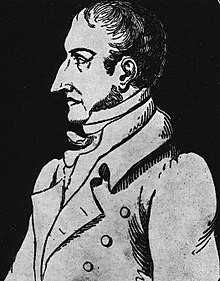
Ikey Solomon, on whom Fagin has often been said to be based
Fagin has been the subject of much debate over
antisemitism, during Dickens' lifetime and in modern times. In an introduction to a 1981
Bantam Books reissue of
Oliver Twist, for example,
Irving Howe wrote that Fagin was considered an
"archetypical Jewish villain."[4] The first 38 chapters of the book refer to Fagin by his racial and religious origin 257 times, calling him "the Jew", against 42 uses of "Fagin" or "the old man". Dickens, who had extensive knowledge of London street life, wrote that he had made Fagin Jewish because: "it unfortunately was true, of the time to which the story refers, that the class of criminal almost invariably was a Jew".
[5] It is often argued that Fagin was based on a specific Jewish criminal of the era,
Ikey Solomon.
[6] Dickens also claimed that by calling Fagin "the Jew" he had meant no imputation against the Jewish people: "I have no feeling towards the Jews but a friendly one. I always speak well of them, whether in public or private, and bear my testimony (as I ought to do) to their perfect good faith in such transactions as I have ever had with them..."
[7]
In later editions of the book, printed during his lifetime, Dickens excised over 180 instances of 'Jew' from the text.
[8] This occurred after Dickens sold his London home in 1860 to a Jewish banker, James Davis, who objected to the emphasis on Fagin's Jewishness in the novel. When he sold the house, Dickens allegedly told a friend: "The purchaser of Tavistock House will be a Jew Money-Lender."
Dickens became friends with Davis' wife Eliza, who told him in a letter in 1863 that Jews regarded his portrayal of Fagin a "great wrong" to their people. Dickens then started to revise
Oliver Twist, removing all mention of "the Jew" from the last 15 chapters; and later wrote in reply: "There is nothing but good will left between me and a People for whom I have a real regard and to whom I would not willfully have given an offence". In one of his final public readings in 1869, a year before his death, Dickens cleansed Fagin of all stereotypical caricature. A contemporary report observed: "There is no nasal intonation; a bent back but no shoulder-shrug: the conventional attributes are omitted."
[9][7]
In 1865, in
Our Mutual Friend, Dickens created a number of Jewish characters, the most important being Mr Riah, an elderly Jew who finds jobs for downcast young women in Jewish-owned factories. One of the two heroines, Lizzie Hexam, defends her Jewish employers: "The gentleman certainly is a Jew, and the lady, his wife, is a Jewess, and I was brought to their notice by a Jew. But I think there cannot be kinder people in the world."
[7]
Media portrayals

Fagin waits to be hanged.
Ron Moody's portrayal in the original London production of the musical
Oliver! by
Lionel Bart, which he repeated in the Oscar-winning
1968 film, is recognizably influenced by Guinness' portrayal. However, the antisemitic quality of Guinness' portrayal was considerably toned down in the musical, partly because of Moody being Jewish himself; he was in fact the first Jewish actor to portray Fagin. While Fagin remains an unrepentant thief, he is a much more sympathetic and comic character than he is in the novel. His plot with Monks is deleted and his role in Nancy's death is similarly excised, and he is portrayed as being cowardly and deeply afraid of Bill Sikes. Fagin is completely innocent of Nancy's murder and is horrified when he finds out. He even admonishes Sikes saying that: "[He] should not have done that." Bart's musical also deletes Fagin's arrest and the musical ends with Fagin, faced with beginning again, pondering the possibility of going straight. The film version reverses this ending, with Fagin briefly considering reformation, but then gleefully teaming up again with Dodger to start their racket again. Moody's performance as the character is often considered the most critically acclaimed. He won a
Golden Globe for his performance, and was nominated for the
Academy Award for Best Actor. When
Oliver! was brought to Broadway in 1964, Fagin was portrayed by
Clive Revill, but in a 1984 revival, Moody reprised his performance opposite
Tony Award winner
Patti LuPone, who played Nancy. Moody later stated: "Fate destined me to play Fagin. It was the part of a lifetime."
[10]
In the 1980 ATV series
The Further Adventures of Oliver Twist, Fagin was played by
David Swift. In this 13-episode series, Fagin has escaped his hanging by pretending to have had a stroke, which has left him paralyzed (and therefore unfit to be executed) and is in hiding at The Three Cripples, tended to by Barney.
In the 1982 made-for-TV movie version, Fagin is portrayed by George C. Scott. Although the character is generally portrayed as elderly, diminutive, and homely, Scott's version of the character was markedly younger, stronger, and better-looking. Also, this version of the character had him more caring of his orphan charges, feeding them well and treating them with obvious concern. In the 1985 miniseries, Fagin is portrayed by Eric Porter.
In Disney's animated version,
Oliver & Company (1988), Fagin is a kind-hearted but poor man living in New York City. He lives in poverty with his five dogs and is desperately searching for money to repay his debts to a ruthless loan shark. This version does away with the moral quandary of child exploitation as all the characters are dogs who have no real need for money and genuinely want to help their owner. Informed by earlier portrayals, he retains a large nose but his racial characteristics, religion or "Jewishness" play no role in his character. He is voiced by
Dom DeLuise.
Fagin was based on one of two or three characters. One was:
Isaac or Ikey Solomons who had a jewellery shop in the East End. He lived from about 1787 to 1850.
The Wiki account of the life of Ikey is worth reading purely for its entertainment value.
Certainly a far cry from anybody Jewish I have known. (Mostly hard-working honest, educated doctors, lawyers, teachers, musicians, professionals and shop keepers from small families.)
The funniest not only strange but hilarious, incident was that the police transported him from court in a taxi cab owned by a member of his family, who set up an ambush and released him. he escaped to the USA. The funniest, strangest part, is that he went from the USA to Tasmania, Australia where his wife was deported, but he was sent back from Australia to the UK by ship to be tried, then returned as a convict to Australia.
Dickens himself visited the USA, and Canada. he visited the USA in 1842. He visited New York, Boston and New England and other places. His notable effect was priaising the school for the blind, causeing Helen Keller's mother to send Helen Keller there, where Helen met her Teacher Anne Sullivan.
Dickens visited the USA again in 1867-8.
The places he visited were re-isited by Miriam Margolyes for a TV series on Dickens in the USA and Canada.
Back in London, lots to see.
From Wikipedia, the free encyclopedia
The
George and Vulture is a
restaurant in London. There has been an inn on the site, which is off
Lombard Street in the historic
City of London district, since 1142. It was said to be a meeting place of the notorious
Hell-Fire Club and is now a City chop house.
Places to Visit
UK
London
Statue of Charles Dickens, Guildhall.
Dickens House Museum, 48 Doughty Street, (re-opened in July 2020 but must book tickets, rquirement for no overcrowding and social distancing due to Covid-19 and regulations.)
Burial place in Poets Corner, Westminster Abbey, London, England.
Ye Olde Cheshire Cheese Pub, 145 Fleet Street, London. (In Tale or Two Cities.)
Jewish Museum, London, check for exhibitions about the East End of London.
Tours of the East End of London.
Check for Dickens tours in London.
The George and Vulture restaurant, London (Pickwick Papers).
Dickens House, Portsmouth, England. See outside. Check online for latest details.
Rochester Festival (check online for events and museums in UK).
Bleak House, Kent.
Gads Hill Place, Gravesend, Kent.
Many other places in the UK are connected with Dickens or his novels.
AUSTRALIA
Statue of Dickens in Centenniel Parklands, Sydney
Grave of jilted Miss Eliza Emily Donnithorne, who probably inspired Miss Haversham
Jewish Museum
The Jewish cemetery where Ikey Solomon was buried in Tasmania was demolished and has been built over.
USA
Statue of Dickens & Little Nell, Philadelphia, USA.
CANADA
Ottawa Public Library, Ottawa. Stained Glass Window.
Photo credit:
Mike Gifford, Ottawa Public Library, Ottawa, Canada. Stained Glass Window showing Dickens.
Niagar Falls Museum, visited by Dickens.
Useful Websites
Dickens Museum, London:
Gad Hill Place, Kent.
BOOKING IS ESSENTIAL BY PHONING ON 01474 33 76 00 BETWEEN THURSDAY AND SUNDAY IN THE FIRST INSTANCE OR EMAILING INFO@VISITGRAVESEND.CO.UK.
The Jewish Museum of Australia, not to be confused with the Sydney Jewish Museum
Dickens' descendants:
Detailed account of places Dickens visited in 1842, described in his book American Notes, and again in 1867-8. visited by Miriam Margolyes and Dickens items in museums and libraries.
About the author
Come back every day to read a new post.
I have many more posts on famous authors, and sites in the UK, USA, and worldwide. Also several posts on learning languages. Please read my other posts and share links to your favourite posts with your faourite colleagues, friends and members of your family.


